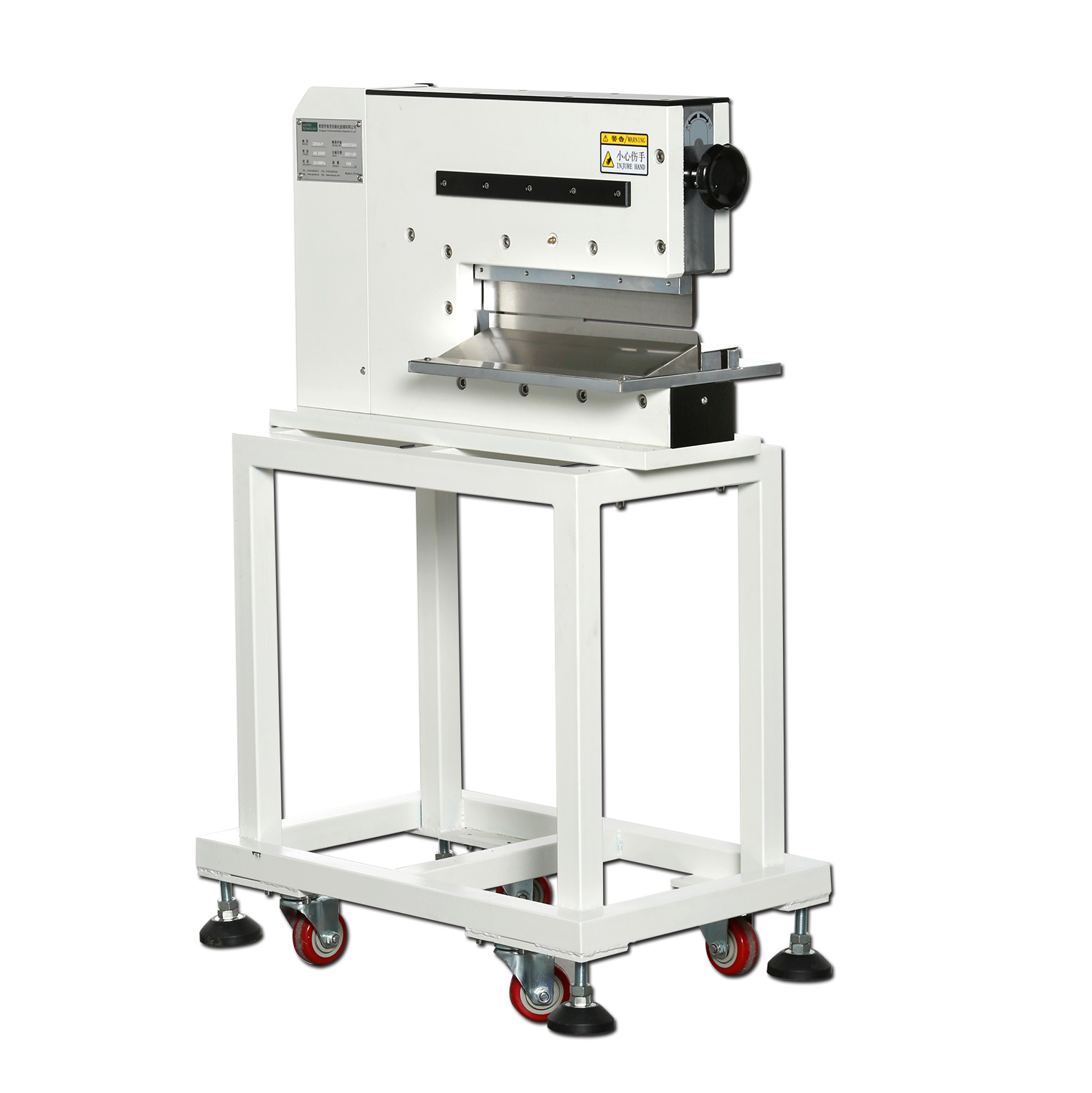
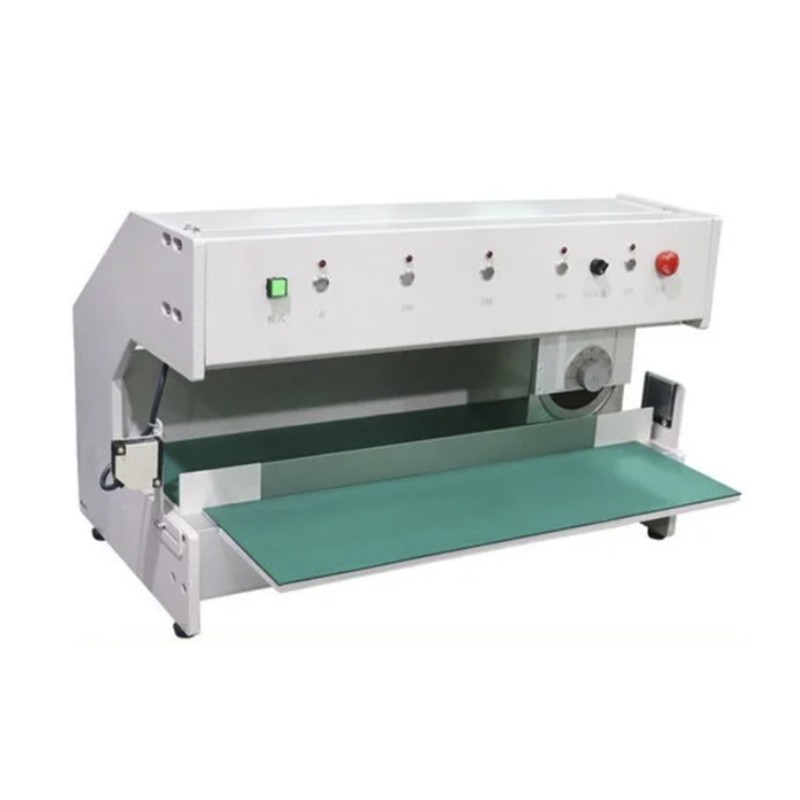
For PCBA applications with strict cleanliness requirements after depaneling, a two-stage dust-control approach is recommended:
Dust collection during depaneling + secondary cleaning after depaneling.
After PCB depaneling processes such as router milling, V-CUT, or saw cutting, fine particles may still remain on the PCB surface, around components, inside connector areas, or along the board edges.
This becomes particularly important for high-density PCBAs, communication modules, automotive electronics, optical modules, and other products where contamination can affect subsequent assembly or product reliability.
In these applications, relying only on the dust collection system integrated into the depaneling machine may not be sufficient.
A more reliable approach is to control dust at the source during depaneling and perform targeted secondary cleaning after depaneling.
A common question from production engineers is:
“If the depaneling machine already has a dust collection system, why do we need another cleaning machine?”
The answer is simple:
Dust collection and product cleaning are two different processes.
The dust collection system on a depaneling machine is primarily designed to capture particles generated during the cutting process.
However, some fine particles may still adhere to the PCB surface or remain around components, connectors, and board edges.
IPC has addressed Foreign Object Debris (FOD) in electronics manufacturing and emphasized the potential quality and reliability risks associated with contamination in electronic products.
Therefore, when the downstream process has strict cleanliness requirements, adding a secondary cleaning step after depaneling can provide a more complete contamination-control process.
The basic concept is:
Generate less dust → capture dust during depaneling → remove residual particles after depaneling.
PCBA products are becoming increasingly compact and densely populated.
Component spacing is getting smaller, while connectors, optical components, and precision structures are becoming more common.
As a result, the traditional standard of “if you cannot see the dust, the PCB is clean” is no longer sufficient for many applications.
ISO 14644-9:2022 provides a methodology for evaluating particle cleanliness of solid surfaces, covering surfaces such as products, equipment, and tools, with particle sizes ranging from 0.05 μm to 500 μm.
ISO 14644-13:2026 further provides guidance on surface cleaning based on particle and chemical concentrations.
This reflects an important trend in electronics manufacturing:
Cleanliness is moving beyond cleanroom environmental control toward direct control of product-surface cleanliness.
For purchasing managers and process engineers, secondary cleaning is therefore not simply a matter of adding a dust collector.
The entire cleaning process needs to be considered as a complete system.
The appropriate solution depends on production volume, cleanliness requirements, and the level of automation.
A dry dust removal machine is suitable for production lines where PCBA loading and unloading are performed manually.
The system can use negative-pressure dust collection, natural air, ionized air guns, or ionized air knives to loosen particles from the PCB surface and collect them.
The Genitec ZM520 Secondary Dust Removal Machine is an example of an offline solution.
The machine uses a negative-pressure dust collection chamber and filtration system. Natural air, ionized air guns, and ionized air knives can be selected according to the application requirements.
Its specified air volume is 750 m³/h.
This configuration is suitable for production flows such as:
Depaneling machine → Manual unloading → Secondary cleaning → Manual tray loading
For manufacturers with relatively simple production flows, this type of offline solution can be practical and cost-effective.
When the production line already uses automated loading and unloading, adding another manual cleaning station may create unnecessary labor and handling.
In this situation, an inline secondary cleaning machine is a better option.
The Genitec ZM550AT Inline Fine-Particle Cleaning Machine is designed for this type of application.
It uses a cyclone-style electrostatic dust removal system.
High-speed rotating airflow loosens fine particles from the PCBA surface. Electrostatic technology is then used to address charged particles, while the negative pressure generated inside the machine creates a siphon effect to collect the contaminants.
The ZM550AT features independent upper and lower cyclone cleaning systems, together with independent upper and lower ionized air guns.
This allows the system to clean both sides of the PCBA.
Key specifications include:
Effective cleaning area: 350 × 300 mm
Repeatability: ±0.05 mm
Upper and lower independent cyclone cleaning
Upper and lower independent ionized air systems
Automatic infeed and outfeed
Compatible with rails, belts, or linear modules
For automated PCBA production lines, this type of configuration can be integrated with upstream and downstream equipment to reduce manual handling.
This is one of the most frequently overlooked points when selecting a secondary cleaning system.
Simply blowing dust away does not mean that the PCBA has been cleaned.
If particles are blown outside the machine or redistributed onto another area of the PCB, the contamination has not actually been removed.
A properly designed secondary cleaning system should therefore include three basic stages:
Loosen → Collect → Filter
The ZM550AT follows this principle.
First, cyclone airflow and electrostatic technology help detach fine particles from the PCBA surface.
The particles are then captured through negative-pressure collection and the internal siphon effect.
Finally, gravity separation and filter-bag filtration are used to process the collected particles.
For high-cleanliness applications, this approach is generally more important than simply increasing airflow.
The key question is not:
“How powerful is the air?”
It is:
“Where does the dust go after it is removed from the PCB?”
Are you dealing with conventional PCB cutting dust or fine particles?
Are the particles mainly located along the board edges, or are they also present around components and connectors?
Different contamination characteristics require different cleaning technologies.
Fine particles can become electrostatically attached to PCB and component surfaces.
In these cases, conventional air blowing may have limited effectiveness.
A combination of ionized air, electrostatic neutralization, and controlled airflow can be more suitable for removing these particles.
The key question is not simply:
“How much airflow does the machine provide?”
The more important question is:
“Where does the dust go after it is removed?”
Negative-pressure collection, filtration performance, and dust collection chamber design should all be included in the equipment acceptance criteria.
For manually operated production lines, an offline dry dust removal machine may be sufficient.
For automated production lines, an inline secondary fine-particle cleaning machine is generally more appropriate.
There is little value in purchasing an automated cleaning system if operators still need to manually load and unload every PCB.
Before purchasing equipment, it is recommended to test the machine using your actual PCBA products.
Compare the PCB before and after cleaning through particle measurements, microscopy, or other appropriate inspection methods.
For products with defined cleanliness specifications, the acceptance criteria should clearly specify:
Particle size
Detection method
Allowable residual particle level
Sampling method
Cleaning performance requirements
This makes equipment acceptance measurable rather than subjective.
Genitec provides different secondary cleaning solutions based on production methods and cleanliness requirements.
The ZM520 is designed primarily for offline production environments.
Operators manually load and unload the PCBA.
Depending on the product requirements, the machine can use:
Natural air
Ionized air guns
Ionized air knives
Negative-pressure dust collection
Filtration
It is suitable for production lines where a dedicated secondary cleaning station is required after depaneling.
The ZM550AT is designed for automated production lines with higher cleanliness requirements.
It can be connected with upstream and downstream equipment through rails, linear modules, or other automated transfer mechanisms.
Its upper and lower independent cyclone cleaning systems, combined with ionized air technology, provide automated cleaning of both sides of the PCBA.
This makes it particularly suitable for applications where residual fine particles need to be controlled as part of an automated manufacturing process.
There is no single secondary cleaning system that fits every PCBA application.
The right solution should be determined by:
Particle type + cleanliness requirements + production volume + automation level + upstream and downstream processes
For conventional PCBA dust removal after depaneling, an offline dry dust removal machine may already be sufficient.
For communication modules, automotive electronics, optical modules, and other applications that are more sensitive to fine-particle contamination, an inline fine-particle cleaning system may be worth considering.
The goal is not simply to add another machine.
The goal is to establish a complete process:
PCBA depaneling → Dust collection → Secondary cleaning → Dust filtration → Downstream assembly
When these processes are properly connected, the manufacturer can achieve more consistent control of residual particles throughout the production flow.
No.
If the product has no specific cleanliness requirements, the dust collection system integrated into the depaneling machine may be sufficient.
For high-cleanliness PCBAs, communication modules, automotive electronics, optical modules, and other contamination-sensitive products, however, the need for secondary cleaning should be evaluated based on actual residual particle levels.
A dry dust removal machine is mainly designed for general dust removal after depaneling.
A fine-particle cleaning machine focuses more on removing small particles, electrostatically attached contaminants, and residual particles from the PCBA surface.
The ZM520 is suitable when the production line primarily uses manual loading and unloading and requires a dedicated offline cleaning station after depaneling.
The ZM550AT is suitable for automated production lines where the PCBA has relatively strict fine-particle cleanliness requirements and inline cleaning is preferred.
Because capturing dust generated during machining and removing residual particles from the finished PCBA are two different tasks.
A more complete approach is:
Dust control during depaneling + secondary PCBA cleaning + centralized negative-pressure collection and filtration.
This combination provides a more complete contamination-control process for PCBA manufacturing.