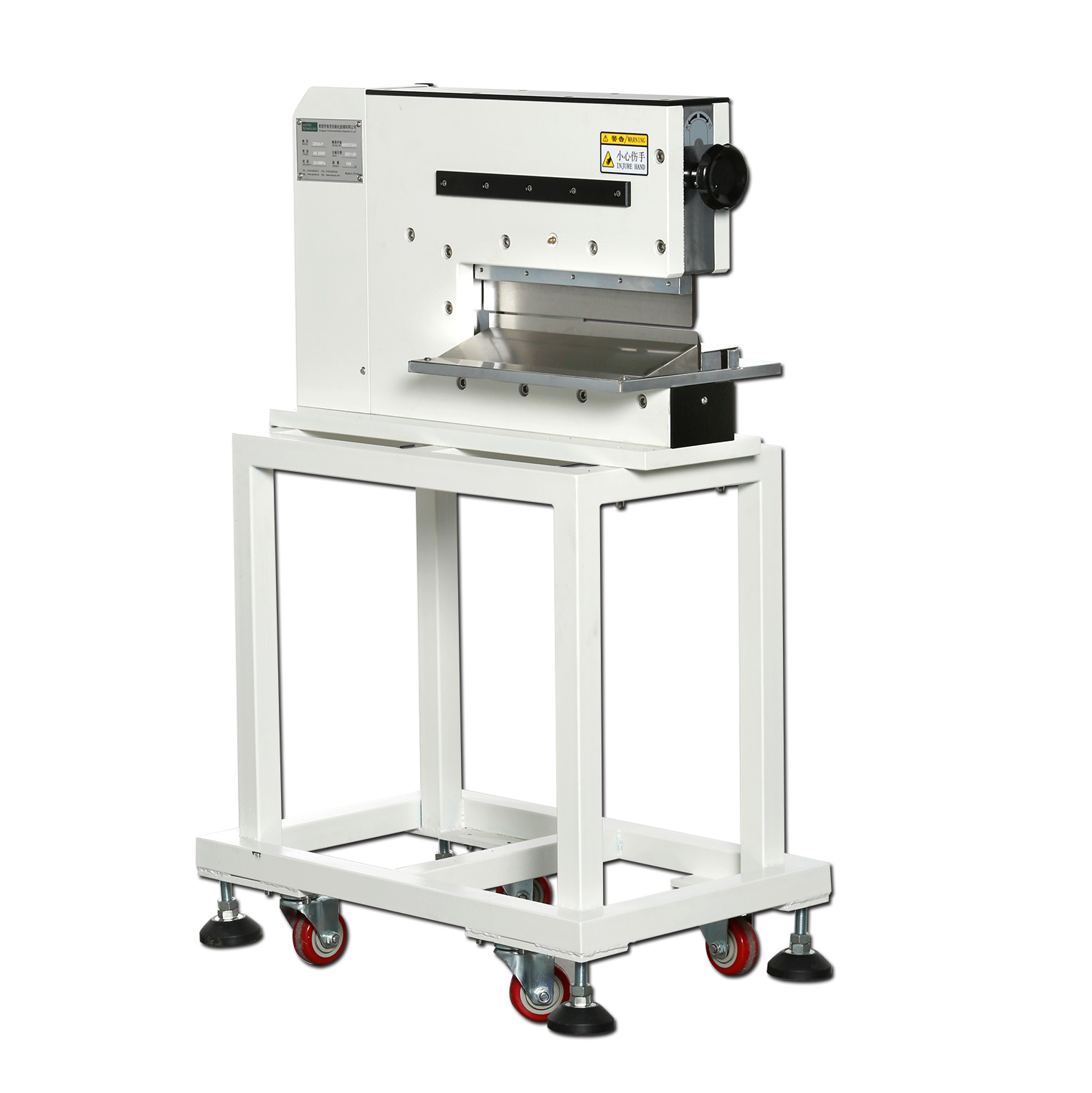
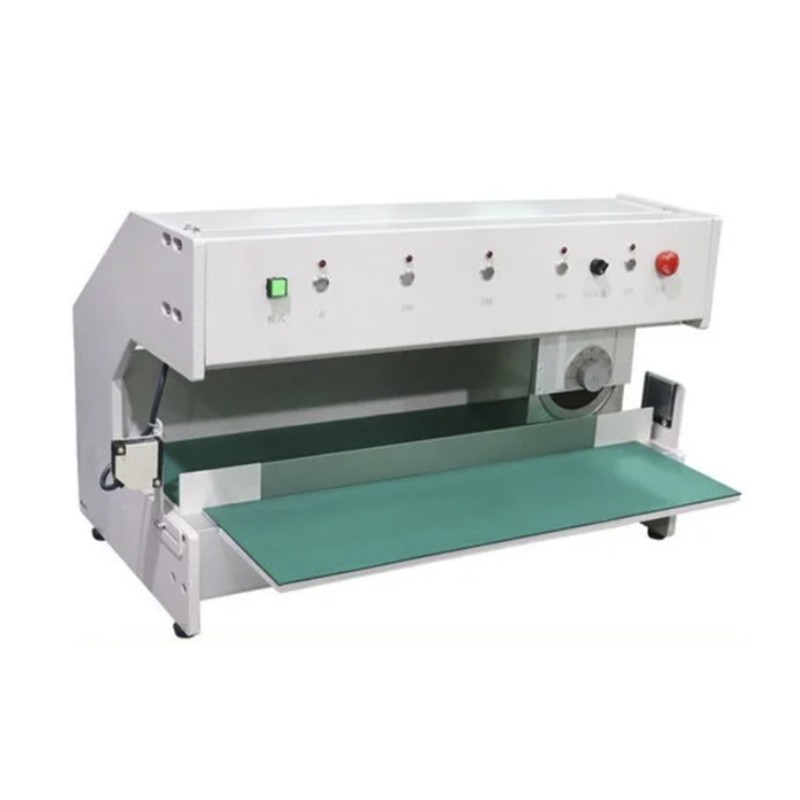
Many customers ask the same question when selecting a PCB depaneling machine:
“What cutting accuracy can it achieve?”
However, in real production environments, a common issue quickly becomes apparent:
although different manufacturers publish impressive specifications, once the equipment is deployed on the production line, problems such as low yield, solder joint cracking, component damage, edge burrs, and stress-induced failures still occur.
The reason is straightforward:
Depaneling accuracy ≠ nominal machine accuracy
What truly affects finished product quality are the following factors:
Cutting method
Stress control capability
Structural rigidity and stability
Positioning system accuracy
Consistency in real-world processing
In actual factory conditions, the stable cutting accuracy typically achieved by different PCB depaneling technologies falls within the following ranges:
| Depaneling Type | Stable Accuracy Range |
|---|---|
| Laser depaneling | ±0.02 mm to ±0.03 mm |
| Router (milling) depaneling | ±0.03 mm to ±0.05 mm |
| Blade (traveling knife) depaneling | around ±0.05 mm |
| Saw blade depaneling | ±0.08 mm to ±0.10 mm |
| Punch depaneling | ±0.10 mm level |
In SMT production, what truly determines quality is not “maximum achievable accuracy,” but rather
stable accuracy combined with effective stress control.
Contact cutting methods (traveling knife, punching) inevitably introduce mechanical stress
Non-contact cutting (laser) offers high precision but comes with higher cost and limited material compatibility
Saw blade and router systems fall into low-stress mechanical cutting structures
Machine frame stability determines micro-vibration behavior
Micro-vibration leads to accuracy drift, burr formation, and inconsistent results
Ball screws, linear guides, and servo system precision
Repeat positioning accuracy is more critical than one-time peak accuracy
PCB clamping stability directly impacts cutting path accuracy
Fixture design is often more critical than the cutting tool itself
PCB thickness, panelization method, V-groove structure, and component density vary significantly
Incorrect process matching causes more problems than the machine itself
Stable accuracy: ±0.03 mm to ±0.05 mm
Advantages:
Low stress
Suitable for complex contours
Ideal for high-density PCBs
Typical applications: communication module PCBs, industrial control boards, automotive electronics, high-density panels
Seprays router depaneling machines focus on high-rigidity structures, precision servo systems, and stable fixture positioning.
The priority is not “impressive specifications,” but long-term accuracy without drift, making them well suited for continuous production lines.
Stable accuracy: ±0.02 mm level
Advantages: non-contact cutting, no mechanical stress
Limitations: high cost, slower cycle time, strict material compatibility requirements
Applications: ultra-thin high-precision boards, special materials, high-end electronic products
Stable accuracy: around ±0.05 mm
Advantages: high efficiency, lower cost
Applications: V-groove boards, post-SMT depaneling, PCBs with low stress sensitivity
Stable accuracy: ±0.08 mm to ±0.10 mm
Advantages: high throughput, simple structure
Limitations: straight-line cutting only
Applications: V-groove boards, stress-sensitive products, low-precision requirements, mass production lines
Seprays saw blade depaneling machines are designed with controlled stress transmission paths.
The core objective is not “cutting faster,” but protecting the PCB, components, and solder joints.
Stable accuracy: ±0.10 mm
Advantages: very high speed, low cost
Limitations: high stress, elevated risk of PCB and component damage
Applications: simple structures, low-density panelized products
In real production environments, depaneling selection typically follows this logic:
High-precision or high-density products → Laser or Router
Stress-sensitive products → Saw blade or Router
Thick boards or simple structures → Traveling knife
Low-cost, high-volume production → Punch
In sectors such as communication modules, automotive electronics, industrial control, and power supply modules, more production lines are adopting router + saw blade solutions—not because of extreme accuracy, but because of:
High stability + low stress + high yield + low rework rates
In actual projects, customers ultimately focus on three key questions:
Can accuracy remain stable over time?
Will the machine experience accuracy drift with prolonged use?
Is yield controllable after production launch?
The core strengths of Seprays depaneling machines lie in structural stability and process-matching capability:
High-rigidity machine frame design
Precision motion system configuration
Process-oriented fixture design philosophy
Stability-focused design for continuous production operation
Seprays does not pursue “laboratory-grade specifications,” but instead addresses the real challenge of long-term, stable depaneling accuracy in real factory environments.
Q1: Is higher depaneling accuracy always better?
No. Stability is more important than peak accuracy. Unstable high accuracy has no practical value.
Q2: Are laser depaneling machines always the best choice?
Laser offers high precision, but higher cost and slower cycle times make it unsuitable for all products.
Q3: What is the most important factor affecting depaneling accuracy?
Not the cutting tool alone, but the combined effect of machine structural stability, software control, and fixture design.
Q4: What should manufacturers prioritize when selecting equipment?
Product structure, stress sensitivity, production takt time, and long-term stability—not a single parameter.